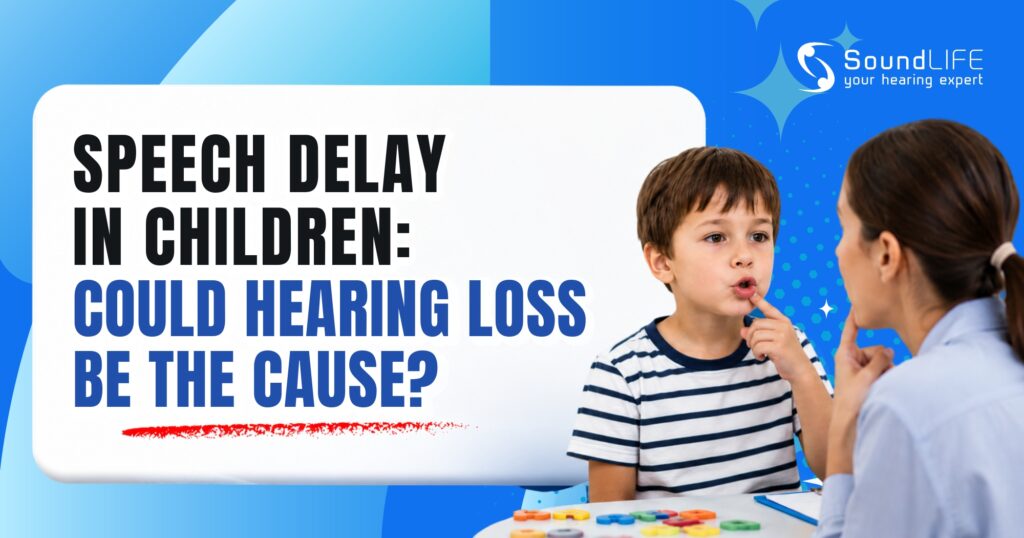
Apabila seorang kanak-kanak masih belum mula bercakap seperti yang dijangkakan, ramai ibu bapa tertanya-tanya sama ada anak mereka hanya “lambat bercakap” atau mungkin terdapat sesuatu yang lebih serius. Walaupun kelewatan pertuturan boleh berpunca daripada pelbagai faktor, kehilangan pendengaran merupakan salah satu faktor yang sering terlepas pandang.
Kanak-kanak belajar bercakap melalui pendengaran. Jika mereka tidak dapat mendengar bunyi pertuturan dengan jelas, proses mempelajari bahasa akan menjadi lebih sukar. Semakin awal kehilangan pendengaran dikesan, semakin baik peluang untuk membantu anak mengembangkan kemahiran komunikasi dan mencapai potensi sepenuhnya.
Dalam artikel ini, kami akan menerangkan bagaimana kehilangan pendengaran boleh menjejaskan perkembangan pertuturan, tanda-tanda amaran yang perlu diperhatikan oleh ibu bapa, serta mengapa saringan pendengaran bayi baru lahir dan pemeriksaan pendengaran kanak-kanak amat penting.
Bolehkah Kehilangan Pendengaran Menyebabkan Kelewatan Pertuturan?
Ya. Kehilangan pendengaran merupakan salah satu punca perubatan utama kelewatan pertuturan dan perkembangan bahasa dalam kalangan kanak-kanak.
Kanak-kanak mempelajari bahasa dengan mendengar suara, perkataan dan bunyi-bunyi di sekeliling mereka setiap hari. Walaupun kehilangan pendengaran yang ringan boleh menyebabkan kanak-kanak sukar mendengar sesetengah bunyi pertuturan dengan jelas. Lama-kelamaan, perkara ini boleh menjejaskan:
- Perkembangan Pertuturan
- Perkembangan Kosa Kata
- Pemahaman Bahasa
- Pembelajaran dan Prestasi Akademik
- Interaksi Sosial
- Keyakinan Diri dan Tingkah Laku
Semakin awal kehilangan pendengaran berlaku, semakin besar kesannya terhadap perkembangan pertuturan dan bahasa jika tidak dirawat.
Bagaimana Pendengaran Membantu Perkembangan Pertuturan
Sejak lahir, bayi sentiasa belajar melalui bunyi.
Mereka mendengar:
- Suara ibu bapa mereka
- Perbualan Seharian
- Muzik
- Bunyi Persekitaran
- Pelbagai Corak Pertuturan
Dengan mendengar bunyi-bunyi ini secara berulang, bayi secara beransur-ansur belajar bagaimana perkataan dibentuk dan akhirnya mula bercakap.
Jika pendengaran berkurang—walaupun sedikit—otak menerima maklumat pertuturan yang tidak lengkap. Akibatnya, kanak-kanak mungkin menghadapi kesukaran untuk meniru bunyi atau menyebut perkataan dengan betul.
Tanda-Tanda Anak Anda Mungkin Mengalami Kehilangan Pendengaran
Ramai kanak-kanak yang mengalami kehilangan pendengaran kelihatan sihat seperti biasa, menyebabkan keadaan ini mudah terlepas daripada perhatian.
Perhatikan tanda-tanda berikut:
Bayi (0–12 bulan)
- Tidak terkejut apabila terdengar bunyi yang kuat
- Tidak menoleh ke arah suara menjelang usia 6 bulan
- Tidak mengoceh secara konsisten
- Tidak memberi respons apabila namanya dipanggil
- Kelihatan tidak menyedari bunyi-bunyi harian
Kanak-kanak Kecil (1–3 Tahun)
- Perkembangan pertuturan yang lewat
- Menggunakan sangat sedikit perkataan berbanding usia mereka
- Kerap berkata “Hah?” atau “Apa?”
- Memerhatikan bibir orang ketika mereka bercakap
- Menaikkan kelantangan TV dengan kuat
- Tidak memberi respons kecuali apabila diajak bercakap secara berhadapan
Preschool Children
- Unclear speech
- Sukar mengikut arahan ringkas
- Frequently misunderstands conversations
- Easily distracted
- Learning difficulties
- Complains that people are mumbling
Not every child with speech delay has hearing loss—but every child with speech delay should have their hearing evaluated.
Hearing Loss Can Be Present From Birth
Many parents assume they would notice if their baby couldn’t hear.
Unfortunately, this isn’t always true.
Some babies are born with hearing loss that is not immediately obvious. Others develop hearing loss during infancy due to:
- Jangkitan telinga
- High fever
- Certain viral infections
- Genetic conditions
- Premature birth
- Jaundice requiring intensive treatment
- Exposure to certain medications
Because hearing loss is not always visible, newborn hearing screening is strongly recommended for every baby.
Why Newborn Hearing Screening Is So Important
Newborn hearing screening is a quick, safe, painless test performed shortly after birth.
Its purpose is to identify babies who may have hearing loss before speech delay develops.
Early detection allows intervention to begin during the most critical period of brain and language development.
Research consistently shows that children identified and treated before 6 months of age have significantly better language outcomes than those diagnosed later. This
Evidence forms the basis of the Joint Committee on Infant Hearing’s internationally recognised 1-3-6 Early Hearing Detection and Intervention (EHDI) guidelines, which recommend:
- Hearing screening by 1 month
- Diagnostic audiologic evaluation by 3 months
- Appropriate intervention by 6 months


My Baby Passed the Newborn Hearing Screening. Do They Still Need Hearing Tests?
Yes.
Passing newborn screening only means your baby’s hearing was normal at the time of testing.
Some children develop hearing loss later due to illness, recurrent ear infections, genetic conditions, or progressive hearing loss.
Parents should seek a hearing assessment if they notice:
- Delayed speech
- Poor response to sounds
- Jangkitan telinga yang kerap
- Sejarah keluarga kehilangan pendengaran
- Concerns raised by teachers or childcare providers
What Happens During a Children’s Hearing Test?
At Soundlife Hearing, children’s hearing assessments are designed to be child-friendly, comfortable, and age-appropriate.
Depending on your child’s age, the assessment may include:
- Video otoscopy to examine the ear canal
- Tympanometry to assess middle ear function
- Behavioural hearing tests (Visual Reinforcement Audiometry or Conditioned Play Audiometry)
- Pure Tone Audiometry for older children
- Otoacoustic Emissions (OAE)
- Auditory Brainstem Response (ABR) or Auditory Steady-State Response (ASSR) for babies or children who cannot complete behavioural testing
Our audiologists will explain the results clearly and recommend the most appropriate next steps.
What If My Child Has Hearing Loss?
A diagnosis of hearing loss does not mean your child cannot learn to speak.
With early intervention, many children develop excellent speech and language skills.
Treatment depends on the type and severity of hearing loss and may include:
- Medical treatment by an ENT specialist
- Monitoring of hearing
- Speech and language therapy
- Hearing aids
- Family communication strategies
- Regular hearing review
The key is early identification and timely intervention.
Can Hearing Aids Help Children with Speech Delay?
If hearing loss is contributing to your child’s speech delay, hearing aids can make a significant difference.
Modern pediatric hearing aids are designed specifically for children and can:
- Improve access to speech sounds
- Support speech and language development
- Enhance learning in school
- Improve social communication
- Increase confidence
Children who receive hearing aids early generally achieve better communication outcomes than those whose hearing loss is identified later.
When Should Parents Arrange a Hearing Test?
Arrange a hearing assessment if your child:
- Is not meeting speech milestones
- Has unclear speech
- Frequently asks people to repeat themselves
- Has recurrent ear infections
- Failed newborn hearing screening
- Has a family history of hearing loss
- Shows behavioural changes related to listening
- Has concerns raised by teachers or doctors
Trust your instincts. If you are worried about your child’s hearing, it is always worth having it checked.
Early Detection Changes Lives
Speech delay is not always caused by hearing loss—but hearing loss should never be ruled out without proper testing.
The earlier hearing problems are identified, the sooner children can receive the support they need to communicate, learn, and thrive.
If you have concerns about your child’s speech or hearing, don’t wait.
A comprehensive hearing assessment can provide answers and peace of mind.
Book a Children’s Hearing Test at Soundlife Hearing
At Soundlife Hearing, our experienced audiologists provide comprehensive hearing assessments for babies, toddlers, and children using age-appropriate techniques and advanced diagnostic equipment.
Whether your child has speech delay, recurrent ear infections, or you’re simply seeking reassurance about their hearing, we’re here to help.
Early hearing checks can make a lifetime of difference. Contact Soundlife Hearing today to schedule your child’s hearing assessment